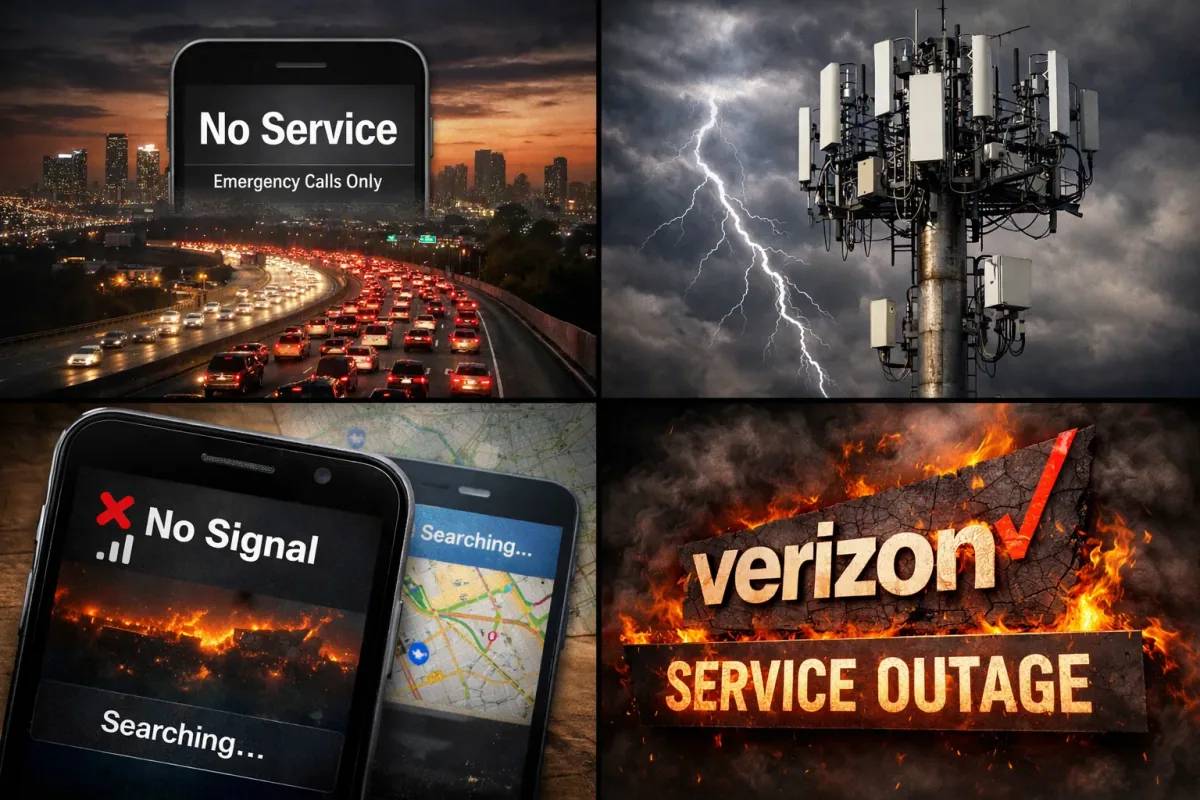
Verizon customers faced a frustrating day on Wednesday when a massive network outage knocked out voice and data services across the United States. Tens of thousands of users found themselves disconnected, unable to make calls, send texts, or access the internet for hours. The wireless carrier has now confirmed the issue is resolved, but the damage to customer trust may linger longer.
If you were affected by this outage, you’ll want to know what happened, how long it lasted, and what Verizon plans to do about it. We’ve compiled everything you need to know about this major service disruption and what it means for your wireless coverage going forward.
What Happened During the Verizon Outage?
The trouble started early Wednesday afternoon when Downdetector, a platform that tracks service disruptions, began receiving a flood of complaints from Verizon customers nationwide. Users reported their phones stuck in SOS mode, complete loss of signal, and inability to connect to the network.
Verizon confirmed the widespread service disruption on social media. The company acknowledged that wireless voice and data services had been impacted across multiple regions.
According to Downdetector data, more than 1 million issue reports poured in within 24 hours. The peak hit when over 178,000 complaints arrived within a single 15-minute window. That’s a staggering number that shows just how widespread this problem became.
Which Cities Were Hit Hardest?
The outage didn’t affect everyone equally. Some cities experienced far more severe disruptions than others.
Major metropolitan areas bore the brunt of the service failure. New York City, Atlanta, Charlotte, Houston, and Dallas reported the highest number of affected customers. Users in these cities struggled to stay connected throughout the day.
The geographic spread suggests the problem originated from a central network component rather than isolated cell tower failures. When major cities across different regions experience simultaneous outages, it points to a broader infrastructure issue.
How Did Verizon Respond?
Verizon remained relatively quiet during the early hours of the outage. The company finally acknowledged the problem publicly as complaints mounted on social media platforms.
The fix came late Wednesday evening, around 10:30 PM Eastern time. That means some customers went without service for nearly eight hours.
The company issued an apology through a spokesperson who told CNN: “Today, we let many of our customers down and for that, we are truly sorry. They expect more from us.”
Verizon announced plans to provide account credits to affected customers. The company promised to share more details about these credits soon, though they haven’t specified the exact compensation amount yet.
What Caused the Service Disruption?
Here’s the frustrating part: Verizon hasn’t revealed what actually caused the outage.
The company has remained tight-lipped about the technical details behind the failure. This lack of transparency has left customers and industry observers speculating about what went wrong.
Jack Burbank, a senior member of IEEE and vice president at Sabre Systems, suggested several potential causes. The outage could have stemmed from faulty configuration changes or software updates that didn’t deploy correctly. Network infrastructure is complex, and even small mistakes can cascade into major disruptions.
How Does This Compare to Other Recent Outages?
This Verizon incident joins a growing list of high-profile tech outages that have disrupted daily life in recent years.
Just months ago, an Amazon Web Services outage took down large portions of the internet in October 2025. That incident exposed how dependent modern services have become on centralized cloud infrastructure.
AT&T experienced a similar widespread outage in February 2024 that left customers across the United States without service. That disruption prompted a Federal Communications Commission investigation into the carrier’s network reliability.
These recurring incidents raise serious questions about the resilience of America’s telecommunications infrastructure. As we rely more heavily on mobile connectivity for everything from emergency calls to business communications, these outages become increasingly problematic.
What Should You Do If Your Service Goes Down Again?
Nobody wants to experience another outage, but it pays to be prepared. Here are some practical steps you can take to stay connected when cellular service fails.
First, enable Wi-Fi calling on your device. When cellular towers fail, Wi-Fi calling can keep you connected through your internet connection. On iPhone, open Settings, tap Cellular, and select Wi-Fi Calling. Android users should navigate to Settings, choose Calls, and enable Wi-Fi Calling.
Second, know that newer phones support satellite text messaging. Devices from Apple, Google, and Samsung on Verizon’s network can send texts even without cellular or Wi-Fi service. You’ll need to be in an open space since buildings and trees block satellite signals.
Finally, if you’re still experiencing issues after an outage is officially resolved, restart your device. Verizon recommends this step to help phones reconnect to the network properly.
Did Other Carriers Experience Problems?
Some AT&T and T-Mobile customers also reported service issues on Wednesday. However, both companies confirmed their networks operated normally.
T-Mobile issued a statement to CNN clarifying the situation: “T-Mobile’s network is keeping our customers connected, and we’ve confirmed that our network is operating normally and as expected. However, due to Verizon’s reported outage, our customers may not be able to reach someone with Verizon service at this time.”
This highlights an important point about how cellular networks interact. When one carrier goes down, customers on other networks may struggle to reach people on the affected network, even though their own service works fine.
The Bottom Line on Verizon’s Service Failure
Verizon’s Wednesday outage affected hundreds of thousands of customers across major US cities. The disruption lasted for hours, leaving people unable to make calls, send texts, or use mobile data when they needed it most.
The company has apologized and promised account credits, but the lack of explanation about what caused the failure remains concerning. Customers deserve transparency about why they lost service and what steps Verizon is taking to prevent future outages.
As our lives become more dependent on reliable mobile connectivity, wireless carriers must invest in robust, resilient infrastructure. One outage might be forgiven, but repeated failures erode customer trust and raise questions about network reliability.
Frequently Asked Questions About the Verizon Outage
How long did the Verizon outage last on January 14, 2026?
The Verizon network outage began early Wednesday afternoon and lasted until approximately 10:30 PM Eastern time, meaning some customers experienced service disruptions for nearly eight hours. The company confirmed resolution late that evening, though some users needed to restart their devices to reconnect properly. Verizon has promised to provide account credits to affected customers, though specific compensation details haven’t been announced yet.
What cities were most affected by the Verizon service disruption?
Major metropolitan areas across the United States experienced the worst impact from the Verizon outage. New York City, Atlanta, Charlotte, Houston, and Dallas reported the highest number of customer complaints according to Downdetector data. The widespread geographic distribution suggests the problem originated from a central network infrastructure issue rather than isolated cell tower failures in specific locations.
Can I still make calls when Verizon’s cellular network is down?
Yes, you have options to stay connected during cellular outages. Wi-Fi calling allows you to make voice calls and send texts over your internet connection when cell towers fail. You can enable this feature in your phone’s settings under the Cellular or Calls menu. Additionally, newer smartphones from Apple, Google, and Samsung support satellite text messaging, though this requires an open outdoor space since buildings and trees block satellite signals.
Has Verizon explained what caused the January 2026 outage?
Verizon has not publicly disclosed the specific cause of the January 14, 2026 network outage. Industry experts suggest potential causes could include faulty configuration changes, failed software updates, or other infrastructure issues. The lack of transparency from Verizon about the root cause has frustrated customers who want assurance that similar disruptions won’t happen again in the future.