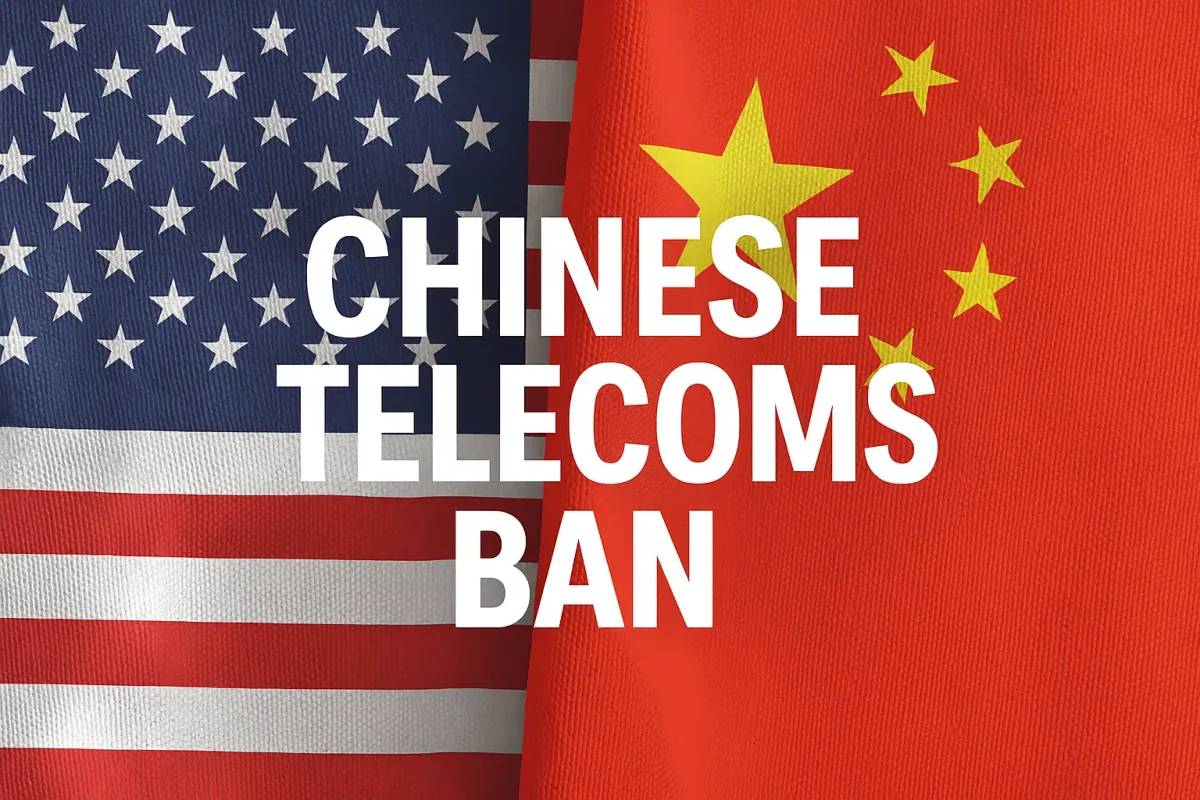
On December 8, 2025, Federal Communications Commission (FCC) dropped a bombshell: it may bar three major Chinese telecom companies — China Mobile, China Telecom, and China Unicom — from connecting to U.S. networks. Reuters+2ETTelecom.com+2
On paper, the move aims to fight robocalls and address security concerns tied to foreign-controlled telecom infrastructure. But dig a little deeper — and the implications go far beyond spam calls. If this ban takes effect, many ordinary phone calls between the U.S. and China could face serious disruptions. That matters not just for big businesses, but for millions of individuals who rely on seamless voice calls to stay connected.
In this post, I’ll break down what’s happening, what could go wrong, and why this matters — especially if you or your contacts regularly make international calls between China and the United States.
What triggered the FCC’s decision
Robocall mitigation compliance under scrutiny
The FCC’s latest decision centers around compliance with its “robocall mitigation database.” It ordered China Mobile, China Telecom, and China Unicom to fix issues with their certifications in that database — or risk being removed. Investing.com Nigeria+2ETTelecom.com+2
If the carriers fail to satisfy the FCC, U.S. voice-service providers and intermediate operators would be required to stop accepting calls directly from those Chinese carriers. Reuters+2MarketScreener+2
A broader context: national security concerns
This isn’t the FCC’s first action against Chinese telecom and tech firms. In recent months, the commission tightened restrictions on Chinese-made telecom equipment and moved to block Chinese-controlled labs from testing electronics destined for U.S. networks. Reuters+2Reuters+2
The push reflects a growing concern that telecom gear and interconnection services tied to certain Chinese firms may pose risks to U.S. national security — potentially enabling surveillance or foreign influence over critical infrastructure. FCC Docs+2Reuters+2
What could go wrong: real-world risks to everyday calls
If the ban goes through, the consequences for cross-border voice calls could get messy — and expensive. Analysts quoted by Chinese media warn about “enormous inconveniences to normal phone calls.” Global Times+1
Here’s what could happen:
• Heavier latency and routing detours
Right now, many calls between China and the U.S. use the most direct, stable, and cost-efficient routes: the networks of China Mobile, China Telecom, or China Unicom. Global Times+1
If those direct paths vanish, calls might be forced through third-country carriers or other intermediaries. That can introduce delays, lower call quality, or even cause certain calls to fail entirely. Global Times+1
• Surge in communication costs
Rerouting through alternate carriers — especially third-country providers — often costs more. That could translate into higher call charges, both for individuals and businesses relying on regular cross-border communications. Global Times+1
• Disrupted business and personal ties
Global supply-chain operations, customer support, international trade negotiations — many rely on stable and reliable voice calls. Analysts warn the ban could “severely damage” economic cooperation, technical exchanges, and even everyday people-to-people contact. Global Times+1
For companies like those manufacturing electronics or automotive components — think firms with operations in both China and the U.S. — the disruption could ripple across entire workflows. Global Times+1
The big picture: what this says about telecommunication geopolitics
The potential ban fits into a broader trend: tightening controls on foreign (especially Chinese) influence over communications infrastructure. In 2025 alone, the FCC rolled out rules targeting Chinese-made telecom equipment, banned certain test labs, and flagged entire firms for possible security risks. Reuters+2Reuters+2
The agency appears focused on closing what it views as vulnerabilities in the network — from hardware to interconnection services. For some, that’s a necessary step to protect national security. For others, critics say it smacks of protectionism or tech-geopolitics disguised as security. Wikipedia+2Security Boulevard+2
Either way, it marks a shift: telecom isn’t just about technology anymore. It’s diplomacy, security, trade, and trust — all wrapped into one.
What everyday users and businesses should watch out for
- International call quality may degrade. If you or your friends/family call across China and the U.S., expect possible delays, dropped calls, or poor audio quality.
- Costs could rise. With direct routing cut, alternate paths may carry higher fees — and that burden might land on end-users.
- Businesses might need fallback communication plans. Companies relying on cross-border calls or coordination should consider alternative channels (e.g., secure VoIP, satellite links) or diversify carriers.
- Regulatory uncertainty looms. The FCC hasn’t yet finalized the ban — the Chinese carriers got a short window to respond. But even the threat has stirred jitters in telecom and business circles.
The story of “China Mobile, China Telecom and China Unicom possibly losing access to U.S. networks” might seem like a niche telecom-policy issue. But for the millions of people and businesses who rely on cross-border communication between China and the United States, it could hit hard.
We’re not just talking about robocalls or spam prevention anymore. We’re looking at real-world disruptions — higher call costs, hiccups in communication quality, broken business ties, and disrupted personal conversations.
If you run a business that relies on international calls, or you regularly speak with family or friends overseas, now’s the time to pay attention — and perhaps explore backup options. In a world where telecom becomes a matter of geopolitics, flexibility and foresight may prove to be the best safeguards.
FAQs: What You Need to Know About the FCC’s Threat to Disconnect Chinese Telecoms
1️⃣ Will the FCC’s decision affect my calls from the U.S. to China?
Yes, the FCC’s threat to disconnect Chinese telecoms from U.S. networks could affect normal phone calls between the two countries. You may experience delays, call drops, or higher calling fees if routing changes kick in. It’s a good idea to test alternative calling apps or providers now to stay prepared.
The FCC wants to disconnect Chinese telecoms over concerns about robocall security and national security risks. The agency says China Mobile, China Telecom, and China Unicom must meet compliance rules or U.S. carriers must stop carrying their traffic. The move aims to fight spam and protect networks — but it also creates communication challenges.
3️⃣ How soon could normal phone calls between China and the U.S. get disrupted?
If the FCC finalizes its ruling soon, disruptions could happen quickly after enforcement starts. Call quality could drop first, followed by potential increases in cost. Staying informed helps you adjust before you feel major inconvenience in daily phone communication.
4️⃣ What should businesses do if China–U.S. voice calls become unreliable?
Businesses should plan backup communication options now. Secure VoIP services, messaging platforms, or contracts with carriers that offer alternative routes help ensure continuity. Staying proactive keeps cross-border operations running smoothly if the FCC’s threat to disconnect Chinese telecoms turns into a full ban.
5️⃣ Are there any alternatives if my international calls start failing?
Yes. You can use stable VoIP apps, Wi-Fi calling features, or international calling plans from U.S. providers not directly affected by the FCC rule. Switching to digital tools ensures you stay in touch even if traditional voice calls suffer interruptions.