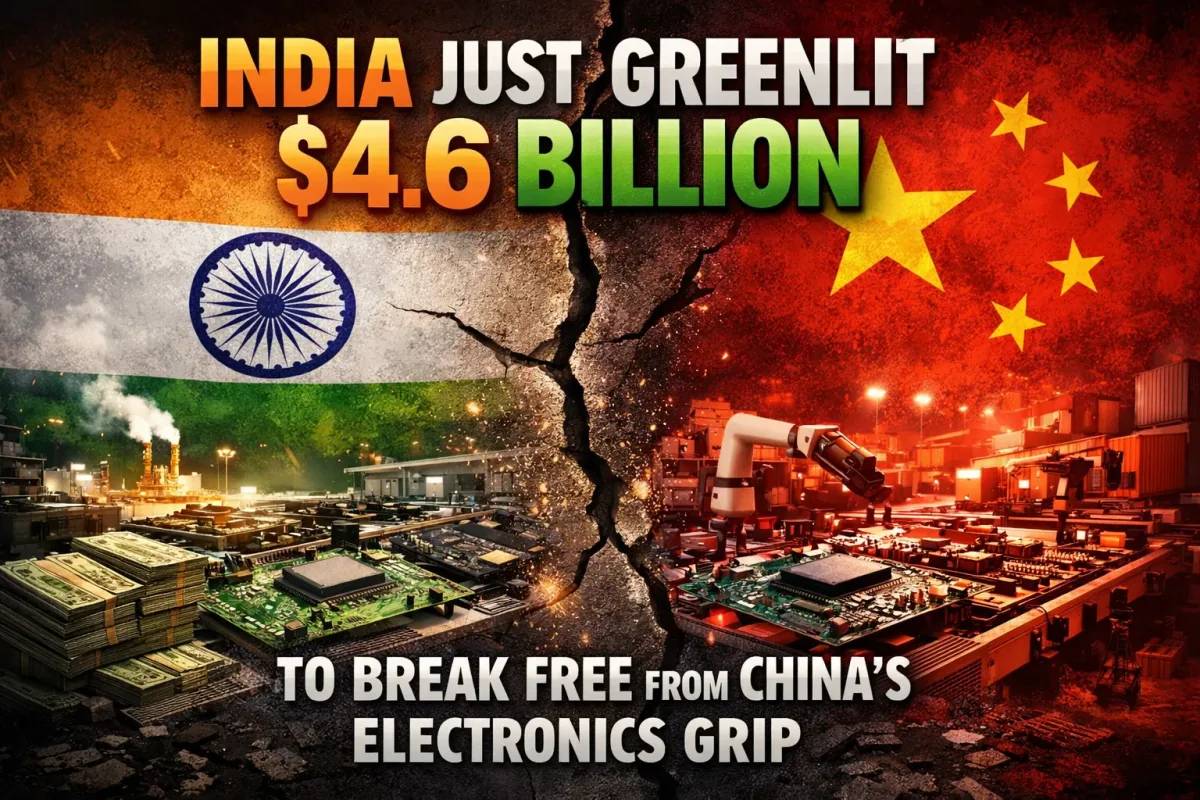
India takes a massive leap toward tech independence. The government greenlights 22 electronics manufacturing projects worth $4.6 billion, signaling a dramatic shift in global supply chains.
Prime Minister Narendra Modi’s administration targets a critical weakness in India’s tech ecosystem. The country imports most electronic components from China. This approval changes that reality. According to reports from Investing.com, these investments promise to generate an output valued at $28.6 billion.
Samsung, Tata, and Foxconn Lead India’s Electronics Revolution
The Ministry of Electronics and Information Technology cleared proposals under its Electronics Component Manufacturing Scheme on Friday. Major players Samsung Electronics, Tata Electronics, and Foxconn secured government subsidies totaling 229.19 billion rupees.
These companies will manufacture 11 categories of components across multiple sectors. Mobile phones, telecom equipment, consumer electronics, automotive systems, and IT hardware all benefit from this expansion. India shifts from basic assembly work to sophisticated component production.
The projects focus on high-value items that India currently imports. Camera modules, display modules, and mobile phone enclosures top the list. Industry sources indicate these components represent critical gaps in India’s supply chain.
Four Chip Manufacturing Plants Start Production This Year
Electronics Minister Ashwini Vaishnaw delivered significant news alongside the approval announcement. Four fabrication facilities will begin commercial production in 2026. Micron and Tata operate these advanced manufacturing plants.
This development marks India’s entry into semiconductor production. China and East Asia have dominated this sector for decades. India now builds domestic capabilities in the most sophisticated electronics manufacturing segment.
The government pushes beyond simple assembly operations. Local production of complex sub-assemblies strengthens India’s position in global tech markets. Companies can source components domestically instead of relying on imports.
Why India’s $4.6 Billion Electronics Bet Matters Now
India joins a global movement away from China-centric supply chains. Recent geopolitical tensions accelerate this shift. Countries diversify their manufacturing bases to reduce dependency on single sources.
The Electronics Component Manufacturing Scheme attracts both international giants and domestic players. This dual approach ensures technology transfer while building local expertise. Indian manufacturers gain knowledge from global partners while developing indigenous capabilities.
The timing proves strategic. Global electronics demand continues rising. Companies seek alternatives to Chinese manufacturing. India offers competitive advantages including lower labor costs, a massive domestic market, and government support through subsidies and policy reforms.
The 22 approved projects create jobs and boost India’s manufacturing output. The government expects these initiatives to strengthen domestic supply chains significantly. Import dependence drops as local production ramps up.
Modi’s Make in India initiative gains momentum with this approval. Previous incentive programs laid groundwork for electronics manufacturing expansion. This latest round focuses specifically on components—the building blocks of finished products.
Foreign companies invest billions because India provides growth opportunities. The country’s electronics market expands rapidly as more citizens buy smartphones, laptops, and connected devices. Domestic production serves both local consumption and export markets.
Frequently Asked Questions About India’s Electronics Manufacturing Investment
What is India’s $4.6 billion electronics manufacturing project?
India approved 22 proposals worth $4.6 billion under its Electronics Component Manufacturing Scheme. Major companies including Samsung, Tata Electronics, and Foxconn will manufacture critical electronic components like camera modules, display modules, and mobile phone enclosures. The Ministry of Electronics and Information Technology expects these projects to generate $28.6 billion in output while reducing India’s dependence on imported components from countries like China.
Which companies received approval for electronics manufacturing in India?
Global technology leaders Samsung Electronics, Tata Electronics, and Foxconn secured government subsidies under the 229.19 billion rupee scheme. These companies will produce components for mobile phones, telecom equipment, consumer electronics, automotive systems, and IT hardware. Additionally, Electronics Minister Ashwini Vaishnaw announced that four semiconductor fabrication facilities operated by Micron and Tata will start commercial production in 2026.
How will India’s electronics manufacturing expansion affect consumers?
India’s electronics manufacturing push benefits consumers through potentially lower prices on smartphones and electronic devices. As India produces more components locally, manufacturers reduce import costs and shipping expenses. This shift could lead to more affordable electronics in the Indian market. Additionally, increased local production means faster product availability and better after-sales support for Indian consumers.
Why is India investing heavily in electronics manufacturing now?
India aims to reduce its heavy reliance on Chinese imports for electronic components while capitalizing on global supply chain shifts. Recent geopolitical tensions push companies to diversify manufacturing beyond China. India offers competitive advantages including lower labor costs, a growing domestic market of 1.4 billion people, and strong government support through incentive schemes. The timing allows India to position itself as a viable alternative manufacturing hub for global electronics companies.