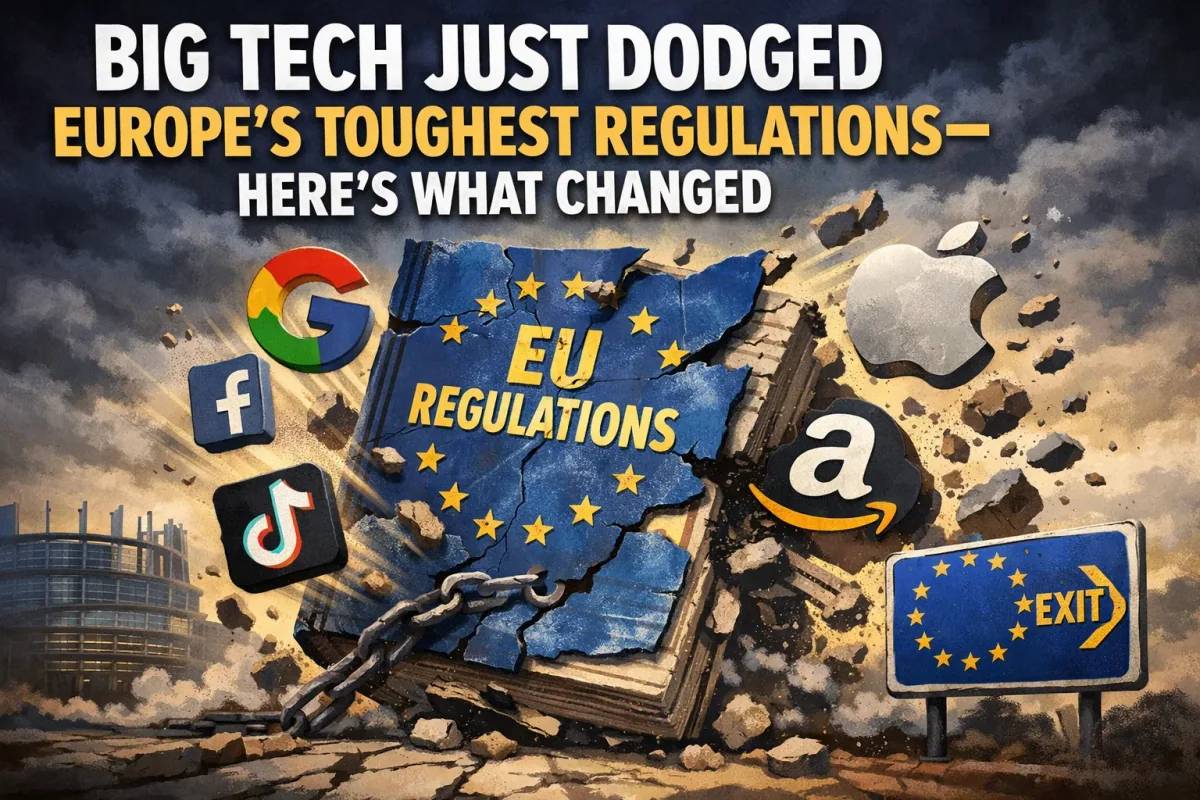
Europe was ready to tighten the screws on Big Tech. Then it didn’t.
The European Union has pulled back from implementing stricter regulations that would have dramatically reshaped how tech giants operate across the continent. Companies like Apple, Google, Amazon, and Meta were bracing for a regulatory storm, but the latest overhaul of the EU’s digital rules suggests calmer waters ahead. This shift marks a significant change in Brussels’ approach to governing the world’s most powerful technology companies—and it could reshape the global regulatory landscape.
The Digital Markets Act Gets a Softer Touch
The European Commission is revising its Digital Markets Act (DMA) implementation strategy. Instead of expanding restrictions, regulators are stepping back from several proposed enforcement measures that would have imposed additional compliance burdens on designated “gatekeepers.”
According to Reuters, sources familiar with the matter confirm that Big Tech companies will be spared from the strictest proposed rules in this regulatory refresh. The changes represent a notable departure from the aggressive stance European regulators had maintained over the past several years.
The DMA originally targeted platforms that act as gatekeepers—companies so dominant that they effectively control access to markets. These include search engines, social networks, cloud services, and app stores. The law aimed to prevent these giants from abusing their market position.
What Sparked This Regulatory Retreat?
Several factors influenced the EU’s decision to ease up on tech regulation. Economic concerns top the list.
Europe’s technology sector has struggled to compete with American and Chinese counterparts. The continent lacks homegrown tech champions on the scale of Google or Apple, making the regulatory calculus more complex.
Industry lobbying played its role too. Tech companies have consistently argued that excessive regulation stifles innovation and creates compliance costs that smaller competitors can’t absorb. Yahoo Finance reports that these arguments appear to have resonated with EU officials reconsidering their approach.
Political winds have also shifted. With global economic uncertainty and concerns about European competitiveness, some regulators believe fostering innovation should take priority over punitive measures.
The Balance Between Innovation and Control
The EU faces a fundamental dilemma. Strict regulations can protect consumers and ensure fair competition. They can also create barriers that prevent the next generation of companies from emerging.
European regulators have watched their regulatory framework become a global model. Other jurisdictions have copied elements of GDPR and the DMA. But admiration doesn’t equal economic success. Europe still imports most of its cutting-edge technology rather than developing it domestically.
This reality check has prompted soul-searching in Brussels. Should Europe lead the world in tech regulation or in tech innovation? The answer increasingly appears to be: both, but with more balance than before.
What Changes Are Actually Coming?
Specific details remain under wraps, but the overall direction is clear. The revised approach will maintain core DMA principles while reducing additional compliance layers.
TechRadar notes that the EU is going softer on Big Tech in its digital rules overhaul. Rather than introducing new categories of restrictions, regulators will focus on enforcing existing rules more effectively.
Companies designated as gatekeepers will still face interoperability requirements, data sharing obligations, and restrictions on self-preferencing. But they won’t face the additional restrictions that had been under consideration for this regulatory cycle.
The change suggests a more pragmatic approach. Enforce what’s already on the books before adding new layers of complexity.
Impact on Consumers and Competition
What does this mean for ordinary users? Probably less dramatic change than initially expected.
Existing DMA requirements already push tech companies toward more open ecosystems. Apple must allow alternative app stores on iOS. Google faces restrictions on how it bundles services. Meta must ensure messaging interoperability.
These requirements aren’t disappearing. They’re simply not being expanded at the rate many anticipated. For consumers, the immediate impact will be minimal. The long-term implications depend on whether existing rules prove sufficient to address competitive concerns.
Global Implications of Europe’s Pivot
Europe’s regulatory stance influences policy worldwide. When the EU softens its approach, other regulators take notice.
The “Brussels Effect”—where European regulations become de facto global standards—has defined tech policy for years. Companies often implement EU-compliant features worldwide rather than maintaining separate systems for different markets.
A less aggressive EU might slow the global regulatory momentum. Countries that looked to Europe for leadership may adopt their own approaches instead. Or they might interpret Europe’s pullback as evidence that strict tech regulation carries economic risks.
The American Competitive Angle
This development arrives as American tech companies face regulatory scrutiny at home. The Justice Department has pursued antitrust cases against Google and Apple. The FTC has challenged Meta and Amazon.
European regulators easing pressure while American enforcement intensifies creates an interesting dynamic. Tech companies might find the global regulatory landscape more balanced than they feared—or hoped, depending on their perspective.
The shift also reflects broader geopolitical considerations. As technology becomes increasingly central to economic and national security, regulators weigh competitive impacts more carefully. Nobody wants their regulatory framework to become an unintentional subsidy for foreign competitors.
What Happens Next?
The revised digital rules will undergo standard EU legislative processes. Final implementation will take months, possibly longer.
Tech companies will continue monitoring developments closely. Even a “softer” approach still means significant compliance obligations. The DMA remains one of the world’s most comprehensive tech regulation frameworks.
Advocacy groups and smaller competitors may push back. They’ve championed aggressive regulation as necessary to check Big Tech power. Any perceived weakening of enforcement will meet resistance.
The ultimate test will be whether this recalibrated approach achieves its dual objectives: protecting competition and consumers while fostering European innovation. That verdict won’t come quickly.
The Bigger Picture
Europe’s regulatory pivot reflects a maturing understanding of technology policy challenges. Early enthusiasm for aggressive regulation has met the complex reality of global markets, innovation ecosystems, and economic competition.
The pendulum hasn’t swung completely back toward tech-friendly deregulation. It’s simply found a more centered position. Europe still maintains more comprehensive tech regulation than most of the world. The change is one of degree, not direction.
For technology firms, this provides limited breathing room. For consumers, regulatory shifts are likely to unfold at a slower pace. And for the wider policy discussion, it shows that regulators worldwide are still working to strike the right balance.
That search will continue. Technology evolves faster than regulation can adapt. The rules being debated today address the tech landscape of yesterday. Tomorrow’s challenges—from artificial intelligence to quantum computing—will demand new regulatory thinking.
Europe’s decision to ease up on Big Tech doesn’t end the regulatory conversation. It simply marks the end of one chapter and the beginning of another. How regulators, companies, and users navigate this new phase will shape the digital economy for years to come.
FAQ: EU Big Tech Regulation Changes
Will Europe stop regulating Big Tech companies completely?
No, the EU isn’t abandoning tech regulation. The Digital Markets Act remains in force, and designated gatekeepers still must comply with existing requirements. The change means Europe won’t add new layers of restrictions right now. Companies like Google, Apple, Meta, and Amazon still face interoperability mandates, data sharing obligations, and anti-self-preferencing rules. Regulators are focusing on enforcing current laws effectively rather than constantly expanding the rulebook.
Why did the European Union decide to soften its approach to tech regulation?
Economic competitiveness drove this shift. Europe lacks major homegrown tech champions and relies heavily on American and Chinese technology companies. Policymakers worried that overly strict regulations might harm European innovation without genuinely leveling the playing field. Industry feedback about compliance costs and concerns about stifling innovation also influenced the decision. The EU is trying to balance consumer protection with fostering a competitive European tech sector.
What does this mean for consumers using tech platforms in Europe?
Day-to-day user experiences won’t change dramatically. Existing DMA protections remain in place, including requirements for alternative app stores on iOS, messaging interoperability across platforms, and restrictions on how companies bundle services. You’ll continue benefiting from privacy protections and competitive safeguards already implemented. The difference is that additional features and protections that might have come from expanded regulations will arrive more slowly or potentially not at all.
Could other countries follow Europe’s example and ease tech regulations?
Possibly, since European policy often influences global regulatory approaches. The “Brussels Effect” means many countries look to EU frameworks when developing their own tech policies. If Europe demonstrates that moderate regulation achieves better outcomes than aggressive enforcement, other jurisdictions might adopt similar balanced approaches. However, the United States currently pursues its own antitrust cases against major tech companies, suggesting regulatory trends vary by region based on local priorities and competitive concerns.