$1 Billion Subsea Cable Will Transform Asia’s Digital Future—Here’s How
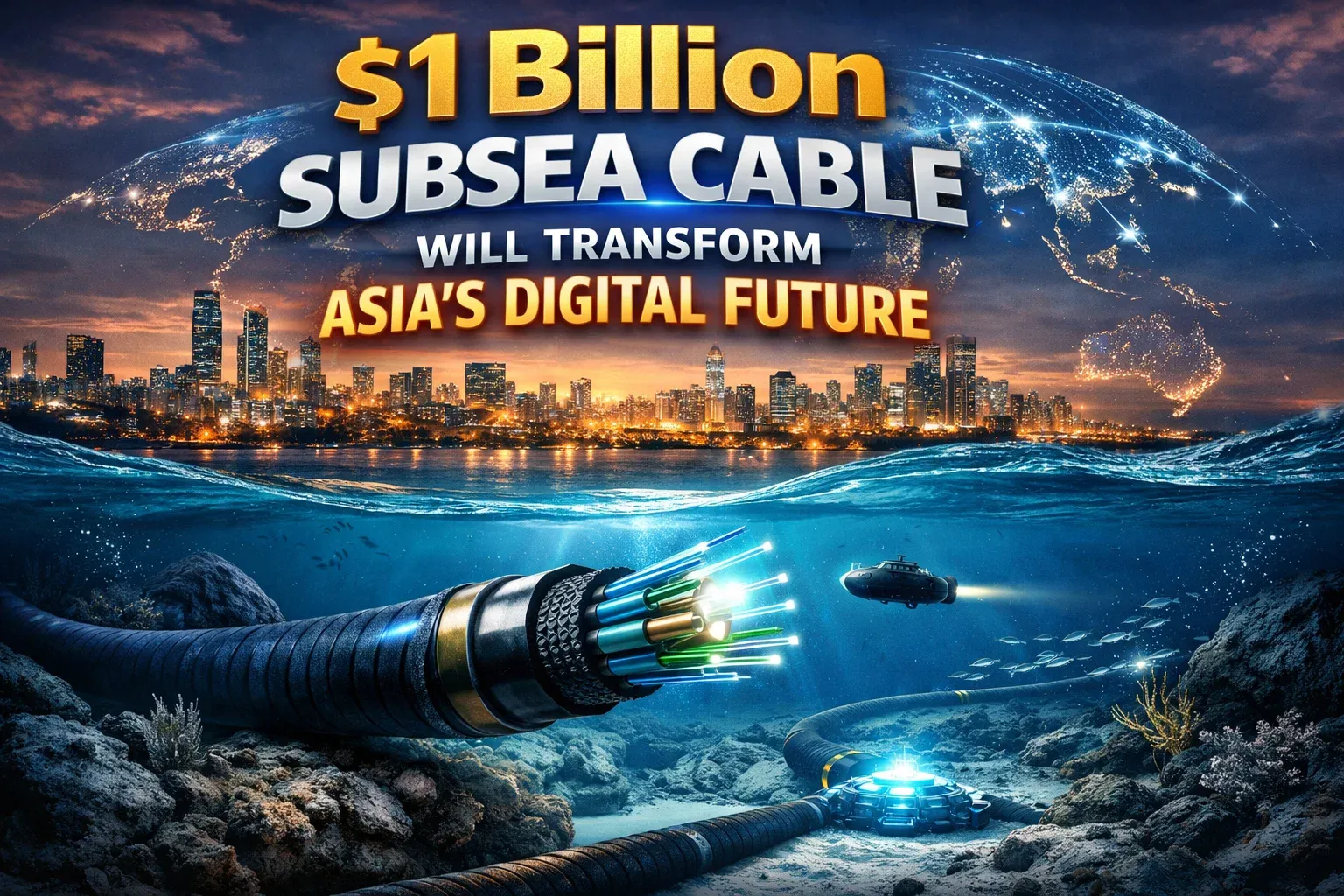
Three Japanese giants just announced a game-changing underwater cable project that promises to revolutionize how data flows across Asia. The I-AM Cable will connect Japan, Singapore, and Malaysia, with plans to extend to South Korea, Taiwan, and the Philippines—all while avoiding one of the world’s most congested maritime areas.
NTT DATA Group Corporation, Sumitomo Corporation, and JA Mitsui Leasing have launched Intra-Asia Marine Networks Co., Ltd. (I-AM NW) to build and operate this ambitious submarine communication system. The project addresses a critical need: Asia’s exploding demand for cloud computing, artificial intelligence, and data center services. With a target completion in early fiscal year 2029, this cable will reshape digital connectivity across the region.
Why This Submarine Cable Matters
Submarine cables carry 99% of all international data transfers. They form the backbone of our digital economy, supporting everything from video streaming to financial markets. The I-AM Cable project represents a massive infrastructure investment designed to meet Asia’s surging data appetite.
The consortium expects to spend approximately $1 billion on this project. That investment delivers an 8,100-kilometer network with an initial design capacity of around 320 terabits per second. To put that in perspective, this cable can handle massive volumes of traffic simultaneously—enough to support millions of users streaming 4K video at once.
Strategic Landing Points Across Japan
The cable will touch down at three locations in Japan: Chiba, Mie, and Fukuoka. This multi-point approach delivers crucial redundancy. Natural disasters won’t cripple the entire network because traffic can reroute through alternative landing stations.
Fukuoka plays a particularly strategic role. The western Japan city will serve as an international telecommunications hub, coordinating with new data center developments sprouting up in the region. Japan sits between Asia and the United States, making it a natural crossroads for international data traffic.
Cutting-Edge Technology Powers the Network
The I-AM Cable incorporates two breakthrough technologies that set it apart from older systems. Wavelength Selective Switch (WSS) functionality allows operators to remotely adjust bandwidth on individual routes. When demand spikes on the Japan-Singapore connection, technicians can allocate more capacity without touching physical hardware.
Space Division Multiplexing (SDM) technology enables the system to accommodate up to 16 fiber pairs per cable. This translates to 32 cores working in parallel, delivering that impressive 320 terabits per second total capacity. The design offers flexibility as traffic patterns evolve over the cable’s operational lifetime.
Meeting Asia’s AI and Cloud Explosion
The timing of this project couldn’t be better. Cloud computing adoption accelerates across Asia as businesses migrate operations online. Artificial intelligence applications demand enormous bandwidth, processing vast datasets across international borders. Data center development continues expanding throughout the region.
The partners explicitly designed the I-AM Cable to support this AI-driven demand surge. Companies running machine learning workloads need reliable, high-capacity connections between data centers. The new system provides that backbone infrastructure, enabling tech giants and telecommunications operators to serve customers efficiently.
Who Brings What to the Table
Each partner contributes distinct expertise to make this complex project succeed. NTT DATA brings deep experience in digital infrastructure and global network services. The company understands the technical challenges of deploying submarine cable systems and operating them reliably.
Sumitomo Corporation participates through an intermediate entity jointly established with SMFL Mirai Partners Co., Ltd. This structure brings corporate resources and strategic planning capabilities. JA Mitsui Leasing delivers crucial financing expertise—they previously invested in the JUNO system connecting Japan with the U.S. West Coast.
Navigating Geopolitical Waters
Industry observers note that the proposed route carefully avoids the South China Sea. This congested waterway presents both political sensitivities and practical challenges. Existing infrastructure crowds the area, while regulatory scrutiny from multiple nations complicates new deployments.
The consortium chose a path that sidesteps these complications. This decision reflects a broader trend among submarine cable developers seeking politically neutral routes. The strategy prioritizes network security and operational simplicity, even if alternative paths add distance or complexity.
Building Resilience Against Disasters
Asia faces significant natural disaster risks. Earthquakes, tsunamis, and typhoons threaten coastal infrastructure. The I-AM Cable’s multiple landing points and diverse routing create redundancy that protects against catastrophic failures.
Yoshio Sato, CEO of I-AM NW, emphasized this resilience focus: “The launch of I-AM NW marks a significant step in strengthening Asia’s digital infrastructure. This project reflects our commitment to delivering reliable, flexible connectivity solutions that empower businesses and drive digital transformation across the Asia-Pacific region.”
If disaster strikes one section of cable, traffic automatically reroutes through unaffected segments. This architecture ensures continuity of service even under extreme circumstances. Telecommunications operators and technology companies gain peace of mind knowing their connections won’t disappear during regional emergencies.
From Planning to Operational Service
I-AM NW oversees the entire project lifecycle. The company handles initial planning, manages construction, and will eventually sell communication circuits to customers. This integrated approach ensures accountability and streamlines decision-making.
The consortium targets early fiscal year 2029 for service commencement. That timeline accounts for complex permitting requirements, environmental assessments, and the physical challenge of laying 8,100 kilometers of cable across ocean floors. International coordination between multiple nations adds another layer of complexity.
The Bigger Picture: Asia’s Infrastructure Race
This project joins a wave of submarine cable investments across the Asia-Pacific region. Google announced TalayLink in November 2025, connecting Australia and Thailand. That same month, Google unveiled Dhivaru, a Trans-Indian Ocean system linking the Maldives, Christmas Island, and Oman.
These parallel projects reflect unanimous recognition that current infrastructure can’t handle projected traffic growth. Every major technology company and telecommunications provider needs more capacity, more redundancy, and more diverse routing options. The I-AM Cable addresses these needs while positioning Japan as a critical hub in the regional network.
What This Means for Businesses
Companies operating across Asia will gain access to significantly enhanced connectivity. Cloud service providers can establish new points of presence, reducing latency for end users. Financial institutions can process transactions faster and more reliably. Content delivery networks can distribute video and applications more efficiently.
The wavelength selective switch technology offers particular value for business customers. Organizations can request capacity adjustments to match their evolving needs. This flexibility eliminates the traditional approach of overprovisioning bandwidth “just in case”—companies pay for what they actually use.
Challenges Ahead
Submarine cable projects frequently encounter delays. Permitting processes drag on as governments assess environmental impacts and strategic implications. Weather windows for installation work can be limited. Coordinating between multiple countries requires diplomatic finesse and patience.
The $1 billion budget represents current estimates, but cost overruns plague complex infrastructure projects. Currency fluctuations, supply chain disruptions, and unforeseen technical challenges could push the final price tag higher. The consortium will need disciplined project management to hit that 2029 deadline.
Frequently Asked Questions
What is the I-AM Cable project and why is it important?
The Intra-Asia Marine Cable (I-AM Cable) is an 8,100-kilometer submarine communication system connecting Japan, Malaysia, and Singapore, with planned extensions to South Korea, Taiwan, and the Philippines. This project matters because it addresses Asia’s exploding demand for bandwidth driven by cloud computing and artificial intelligence applications. The cable will carry vast amounts of international data traffic, providing the digital backbone that businesses and consumers depend on for everything from streaming services to financial transactions. With 320 terabits per second of capacity, it represents one of the most advanced subsea systems in the region.
When will the I-AM Cable be operational?
The I-AM Cable targets service commencement in early fiscal year 2029. The consortium of NTT DATA, Sumitomo Corporation, and JA Mitsui Leasing announced the project in January 2026, giving them roughly three years to complete planning, permitting, construction, and testing. Submarine cable deployments require extensive coordination between multiple countries for landing rights and environmental assessments. The 2029 timeline accounts for these complexities, though industry experts caution that large infrastructure projects often face delays due to regulatory hurdles, weather conditions, and logistical challenges involved in laying thousands of kilometers of cable across ocean floors.
How much capacity will the I-AM Cable provide?
The system will deliver an initial design capacity of approximately 320 terabits per second. This massive bandwidth comes from advanced Space Division Multiplexing (SDM) technology that accommodates up to 16 fiber pairs (32 cores) per cable working simultaneously. The cable also incorporates Wavelength Selective Switch (WSS) functionality, allowing operators to remotely adjust wavelength bandwidth on individual routes based on demand. This flexibility means capacity can be optimized as traffic patterns evolve, ensuring efficient use of resources. The 320 Tbps capacity positions the I-AM Cable as one of the highest-capacity submarine systems connecting Japan with Southeast Asia.
Which companies are building the I-AM Cable?
Three major Japanese corporations formed a joint venture called Intra-Asia Marine Networks Co., Ltd. (I-AM NW) to build and operate this project. NTT DATA Group Corporation brings expertise in digital infrastructure and global network services. Sumitomo Corporation participates through an intermediate entity jointly established with SMFL Mirai Partners Co., Ltd., contributing corporate resources and strategic planning capabilities. JA Mitsui Leasing provides financing expertise, having previously invested in submarine cable projects including the JUNO system connecting Japan with the U.S. West Coast. Together, these partners committed approximately $1 billion to complete the cable system and begin commercial operations by 2029.