Telenors Sovereign AI Factory Puts Norway in Full Control of Its Critical Data
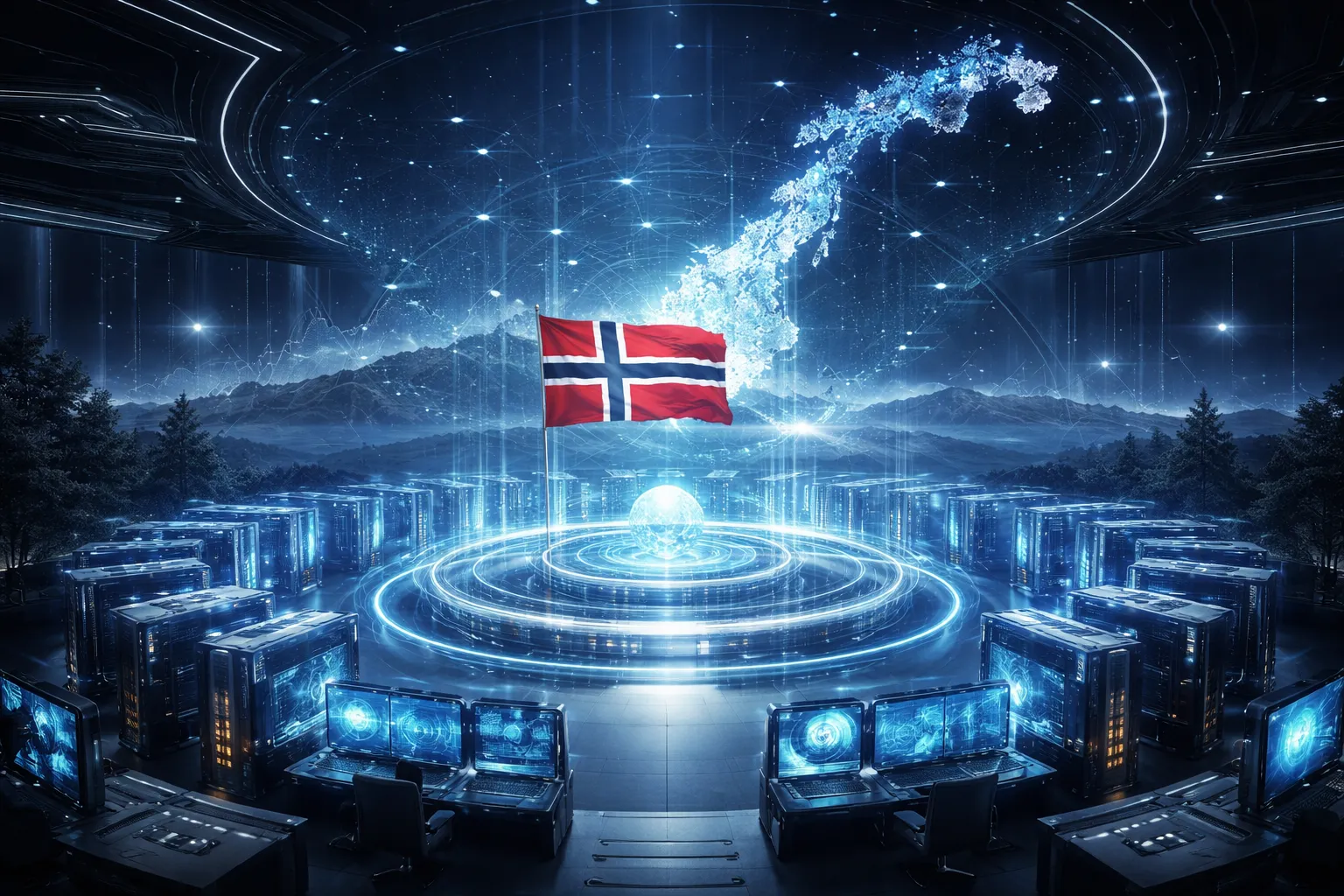
Norway just made a bold move to take back control of its most sensitive national data. Telenor has launched its AI Factory — a fast, sustainable, and sovereign AI cloud platform — and the country is already feeling the impact.
As intelligence becomes as vital as electricity or clean water, Norway refuses to hand over control of its critical data to foreign companies. This article breaks down how Telenors AI Factory works, who built it, and why it matters for the future of national data sovereignty.
What Is Telenors AI Factory and Why Did Norway Need It?
Telenor sits at the heart of Norways digital infrastructure. The company manages processes, data, and systems governed by the Norwegian Security Act — and that creates a very specific problem. Telenor could not simply push sensitive national data into a standard public cloud.
Kaaren Hilsen, CEO of Telenor AI Factory, explained the origin of the project at MWC 2026 in Barcelona. Two years ago, Telenor partnered with Nvidia after identifying the need for a homegrown solution. Together, they took Nvidias AI stack blueprint and wrapped it in telco-grade security built specifically for Norways regulatory requirements.
The thinking went further than just one company. If Telenor could solve this problem for itself, it could solve it for other Norwegian organisations sitting on sensitive data too.
“Intelligence is becoming a national resource, just the same as power, electricity, food, and digital infrastructure.” — Kaaren Hilsen, CEO, Telenor AI Factory
Also Read : Telenor IoT Rolls Out SGP.32 eSIMs to Power Global IoT Deployments
How Real-World Use Cases Are Driving Demand
The market did not wait. As soon as Telenor launched the AI Factory two years ago, customer requests started pouring in. Jørgen Brecke, Senior Vice President of Technology Strategy and Partnerships at Telenor, described three major areas where the platform now delivers real results.
Autonomous Industry
One customer uses the platform to power AI-driven visual recognition for autonomous vehicles operating inside industrial facilities. The operation demands ultra-low latency and strict data residency — the proprietary data must stay within Norway. The AI Factory delivers both.
Public Sector Services
Government agencies handle deeply personal citizen data under strict privacy and archiving regulations. The AI Factory gives public sector organisations the ability to deploy generative AI into their services — improving efficiency and delivering better citizen experiences — while staying fully compliant.
Telenors Own Network Operations
Telenor now runs the platform internally to strengthen its own network. The company uses it for fault detection and automated fault resolution, aiming to fix problems before customers even notice them. Telenor also drives code generation through the platform, and because that code generation connects tightly to sensitive operational data, a secure sovereign environment is non-negotiable.
Brecke noted that GPU usage within Telenors own operations tripled within just six months of launch — a clear signal that the platform delivers genuine value fast.
Also Read : AT&T vs. Verizon in 2026: Which Telecom Dividend Stock Actually Earns Your Money?
Red Hat Powers the Core of the Platform
Telenor selected Red Hat as the core environment for building, training, and deploying its AI agents and applications. Rich Stephens, Vice President of EMEA Telco at Red Hat, outlined three pillars of that support at MWC 2026.
A Complete AI Lifecycle on OpenShift AI
Red Hats OpenShift AI platform handles the full journey — from developing complex models and retrieval augmented generation (RAG) workflows, to training on Nvidia GPUs, selecting the right large language model, and then deploying automation through Ansible. The goal is to keep the environment simple even as the models grow more complex.
Technological Sovereignty Through Hardware Flexibility
Red Hat separates the hardware layer from the operational layer. This gives Telenor and its customers the ability to run any model on any platform — a critical feature as use cases evolve and grow more demanding. No single hardware vendor locks customers in.
Human Sovereignty Through EU-Only Support
Red Hat recently launched what it calls sovereign support. Only EU nationals and EU residents work on any product or programme within this framework. This protects not just the data itself, but the metadata surrounding it — an increasingly important distinction as geopolitical tensions around data access continue to rise.
You can explore more about how Red Hat approaches technological sovereignty at redhat.com and learn more about Telenors AI Factory vision at telenor.com.
Sustainability Is Not an Afterthought — It Is Built In
At MWC 2026, sustainability lost some of the spotlight to other trending topics. Hilsen pushed back on that trend directly.
Telenors AI Factory runs on 100% renewable energy — specifically hydropower. But the platform goes further than just clean energy sourcing. The excess heat generated by its high-powered GPU infrastructure feeds directly into the local district heating network, warming approximately 15,000 homes. Sustainability is not a badge the company added later — it is wired into every layer of the solution from day one.
Emissions from global data centres now exceed those of the airline industry. Telenor chose to build a platform that takes that reality seriously.
Overcoming the Biggest Barrier to Enterprise AI Adoption
Hilsen pointed to a striking finding from an MIT report: 95% of generative AI projects fail to deliver meaningful return on investment. The 5% that succeed share one thing in common — they go deep into the processes, systems, and data of the organisation.
The barrier holding most organisations back is not ambition. It is the fear of experimenting with sensitive data in unsecured environments. Telenors AI Factory removes that barrier. It gives customers a secure, scalable space to experiment — and then scale quickly when results prove out.
Stephens reinforced the point. Architectures on the platform stretch to cover 5G edge inference, bringing AI processing closer to the source of data to support ultra-low latency applications. That flexibility becomes increasingly valuable as enterprise AI use cases grow more complex.
Building a Community, Not Just a Platform
Jørgen Brecke was clear on one point: Telenor did not build the AI Factory alone, and it does not intend to operate it alone. The ecosystem has been central to the project from day one.
Partners provided green energy infrastructure. The SkyGuard data centre delivers a secure, sovereign, and sustainable physical foundation. Red Hat powers the software layer. Nvidia contributed the AI stack blueprint. And a growing community of developers, innovators, and enterprise customers now treat the platform as a safe playground for responsible experimentation.
Portability matters enormously within this ecosystem. The platform runs on a strong Kubernetes foundation, which means customers are not locked into Telenor. That freedom builds trust — and trust brings more builders into the community.
A Model for National AI Sovereignty
Telenors AI Factory represents something bigger than a product launch. It demonstrates that a country can take full ownership of its intelligence infrastructure — just as it does with energy, water, and food supply. Norway is not waiting for foreign cloud providers to offer acceptable terms. It is building on its own terms, with its own rules, powered by its own renewable energy.
The results speak clearly. A tripling of GPU usage in six months. Immediate market demand at launch. Customers in industry, government, and telecoms all finding real value. And a sustainability model that turns waste heat into warm homes.
Norway just showed the world what sovereign AI looks like in practice.
Frequently Asked Questions
What is Telenors AI Factory?
Telenors AI Factory is Norways sovereign AI cloud platform. It handles sensitive national data securely, runs on 100% renewable hydropower, and gives Norwegian businesses and public sector organisations a safe environment to build and deploy AI applications without sending critical data outside the country.
Why does Norway need a sovereign AI platform?
Norway manages critical data under its Security Act. Standard public cloud services cannot guarantee that this data stays within Norwegian borders or control. The sovereign AI Factory keeps sensitive data inside the country, complies with national regulations, and removes the security risk of relying on foreign cloud infrastructure.
How does Telenors AI Factory address sustainability?
The platform runs entirely on renewable hydropower. It also captures the excess heat from its GPU infrastructure and channels it into the local district heating network — warming around 15,000 homes. Sustainability is a core design principle, not an add-on feature.
What role does Red Hat play in the Telenor AI Factory?
Red Hat provides the core cloud-native platform — OpenShift AI — that powers the AI Factory. It manages the full AI development lifecycle, separates hardware from the operational layer for flexibility, and recently introduced sovereign support, meaning only EU nationals and residents work on products within the programme.