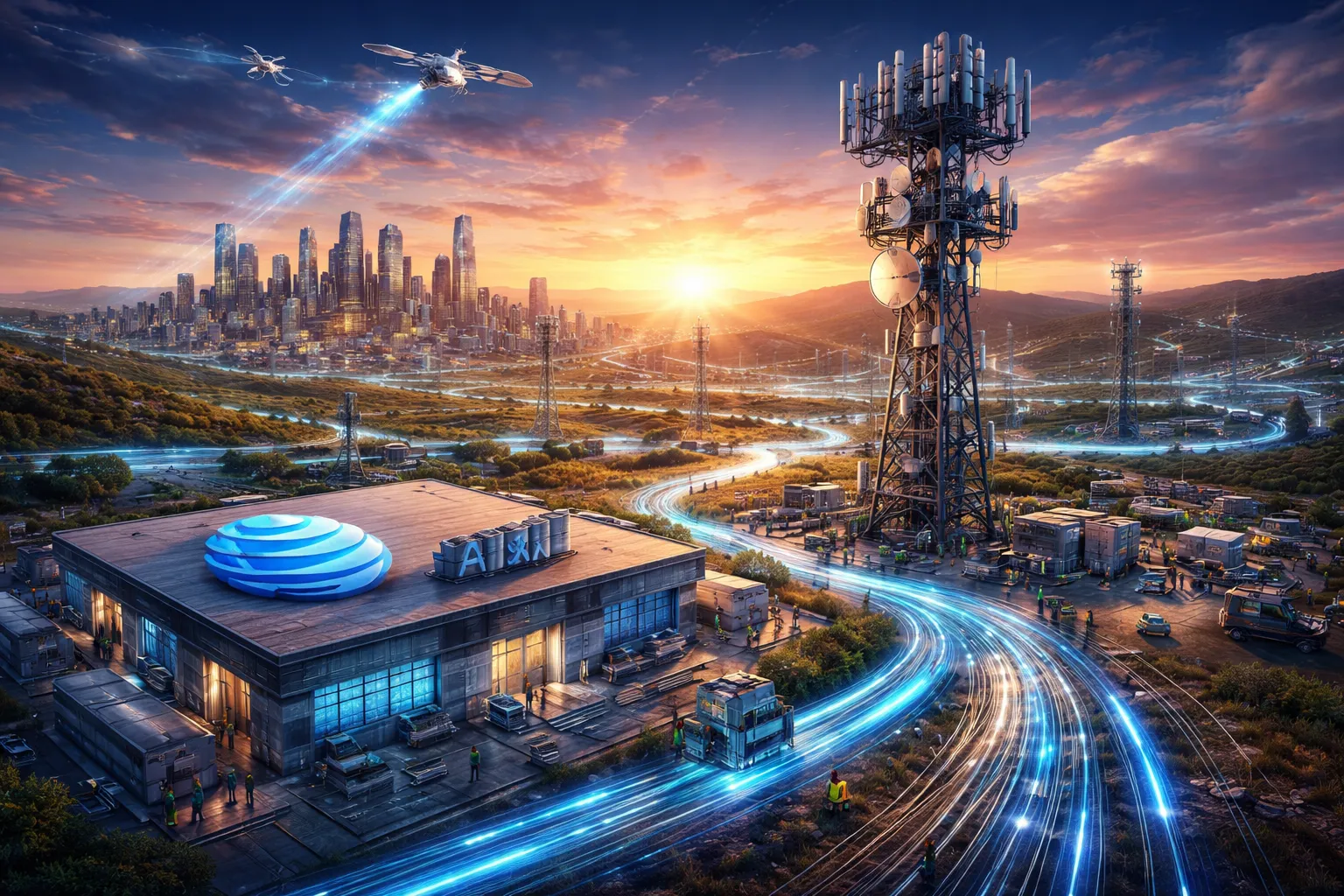
AT&T Commits $250 Billion to Rebuild US Telecom Network for the Future
AT&T just made one of the boldest bets in American telecom history. The Dallas-based giant announced a $250 billion investment to completely overhaul its US network infrastructure over the next five years — and the stakes could not be higher.
The 150-year-old company built much of the communication backbone that millions of American homes and businesses depend on daily. Now, it plans to tear down the old and build something far more powerful in its place. Here is what this means for consumers, competitors, and the future of connectivity in the United States.
A $250 Billion Rebuild from the Ground Up
Copper Is Out — Fiber, 5G, and Satellite Are In
AT&T serves more than 100 million customers across the US, and the network carrying all that traffic shows its age. The company now moves to decommission its sprawling web of legacy copper wires and replace them with a combination of fiber-optic cable, 5G wireless, and satellite links.
This three-pronged approach targets users across urban, suburban, and rural markets — ensuring faster speeds reach communities that legacy infrastructure has long underserved. The company also plans to strengthen FirstNet, its dedicated network for public safety and emergency responders.
CEO John Stankey summed up the ambition in a statement: the company carries the spirit of communication forward in bold new ways, powering connections for a new generation — more instantaneous, seamless, and limitless than ever before.
Why AT&T Is Doing This Now
The Demands of Modern Connectivity Have Changed
Voice calls now account for only a small fraction of traffic running across the AT&T network. Text and data dominate, and that demand continues to accelerate rapidly.
The shift goes deeper than streaming video. Unlike one-way video downloads, cloud computing and remote work require strong, symmetrical upload and download connections. Stankey highlighted this during the company’s January earnings call, stating that the company expects to increase the need for dense fiber networks and more symmetrical connectivity into and out of homes, businesses, and devices.
Read more about NVIDIA and Broadcom are racing for AI chip dominance in 2026
How AT&T Stacks Up Against the Competition
Verizon Spends Billions — But Not Even Close to This
The scale of this investment puts AT&T in a different league. Competitor Verizon reported spending $17 billion on capital expenditures in 2025 and projected $16.5 billion for the current year — a figure Verizon calls top-10 level investment in data infrastructure, excluding data center builders. AT&T’s five-year commitment dwarfs that figure by comparison.
A Political Tailwind Helps AT&T Pull the Trigger
Stankey also credited the current federal policy environment as a key factor that makes this level of investment possible right now. He pointed specifically to President Donald Trump’s favorable tax and regulatory policies, including depreciation provisions tied to the One Big, Beautiful Bill.
“Current Federal telecommunications policy is as strong as I have seen in my career,” Stankey said Tuesday, “making our commitment to invest possible.”
The Bigger Picture: Connecting America for What Comes Next
AT&T traces its roots back to Alexander Graham Bell linking the first pair of telephones with a copper wire — a moment that changed communication forever. The challenge today looks just as pivotal. Dense, symmetrical, high-speed connectivity forms the foundation for the next wave of innovation that businesses and consumers will rely on.
This $250 billion commitment signals that AT&T intends to lead that transition — not follow it.
Frequently Asked Questions
How much is AT&T investing in US telecom infrastructure? AT&T commits $250 billion over five years to modernize its US network. The investment targets fiber, 5G, and satellite upgrades across urban, suburban, and rural markets nationwide.
Why does AT&T need to replace its copper wire network? Copper lines cannot keep up with modern data demands. AT&T replaces them with fiber-optic cable, 5G wireless, and satellite links to deliver faster and more symmetrical upload and download speeds for homes and businesses.
How does AT&T’s investment compare to Verizon’s spending? Verizon spent $17 billion on capital expenditures in 2025 and projects $16.5 billion in 2026. AT&T’s five-year, $250 billion commitment far exceeds that figure, making it one of the largest telecom infrastructure investments in US history.
What role does government policy play in AT&T’s $250 billion investment? AT&T CEO John Stankey credits current federal telecom and tax policies, including depreciation provisions in the One Big, Beautiful Bill, as key factors that make this scale of investment possible at this time.